Posts about productivity

Tag: productivity

  • My 2026: Boundaries, Direction, Momentum

    My 2026: Boundaries, Direction, Momentum

    Now that the new year has started, I’ve found myself thinking about 2026 in a slightly different way.

    Not in the sense of detailed plans or neatly defined milestones.

    More in terms of how I want to move forward, what I want to protect, and what I want to stay open to.

    Somewhere along the way, one thought became pretty clear to me:

    Not less ambition.
    Not less drive.
    Just more intention.

    That’s not because I’ve stopped caring about progress.

    Quite the opposite. The last year reminded me how quickly plans can change and how valuable flexibility really is.

    This way of thinking also builds directly on reflections I shared toward the end of last year:

    about visibility, proactivity, and staying grounded while moving forward.

    Why I’m skipping classic resolutions this time…

    …mostly because 2025 didn’t follow a clean script at all.

    Things ended and started faster than expected.

    Some decisions were well prepared, others emerged through conversations and timing.

    Learning often happened while already moving.

    What I’ve taken from that experience is not that planning is useless but that…

    Rigid resolutions assume a stable environment.
    Founder life (and honestly, most modern work) rarely offers that.

    So instead of fixing outcomes too early, I’m focusing more on setting direction and defining boundaries..

    What I mean by boundaries and direction

    Boundaries help me decide what not to optimize for.

    Direction helps me decide where to invest energy when options appear.

    Together, they create a framework that’s flexible enough to adapt without feeling random.

    For me, this approach feels calmer, more realistic, and more sustainable than a long list of must-haves for the year ahead.

    Five principles I’m carrying into 2026

    I do have goals for 2026.

    I just try to define them as guiding principles rather than fixed targets. Here’s what that looks like for me right now:

    1. Adding a product alongside consulting

    I want to explore how my consulting work could be complemented by a more reusable, productized offering.

    The exact shape isn’t fixed yet, but the intention is clear: leverage, scalability, and impact beyond one-to-one projects.

    2. Keeping Linelia healthy and growing deliberately

    Growth matters. But not at any cost.

    My focus is on sustainability, fit, trust, and energy, letting growth follow quality work instead of chasing volume.

    3. Staying visible without losing authenticity

    Writing, sharing, and connecting will remain part of my rhythm.

    Not as constant self-promotion, but as a way to reflect, exchange perspectives, and stay present.

    4. Staying open to opportunities that emerge from my network

    Some of the most interesting ideas don’t come from plans, but from conversations.

    I want to stay curious and receptive when new opportunities or business ideas surface without forcing anything.

    5. Keeping space for life outside work

    Sports, hobbies, family, recovery.

    Not as a reward after productivity, but as part of what makes good work possible in the first place.

    None of these are rigid promises.

    They’re more like a compass.

    And as you might already know me…of course the will have KPIs at the one or other point.

    Direction over control (with momentum)

    Planning 2026 this way doesn’t mean lowering ambition. Quite the opposite.

    For me, 2026 will also be a year of focus, momentum, and pushing hard, just with clearer boundaries and intention than in 2025.

    What I like about this approach is that it leaves room.

    • Room to adjust.
    • Room to say no.
    • Room to notice when something feels off or surprisingly right.
    • Direction over control.
    • Momentum without burnout.

    That’s how I want to move through 2026.

    I’m curious:

    And as always, conversations come first. If you’re curious how I support organizations and leaders in their own transformation journeys, you can find more about my work here: Linelia’s services.

    And of course, I’m always happy to stay in touch this year.

    If you’d like to exchange ideas, reflect together, or explore potential collaboration, feel free to reach out via my contact page or connect with me directly on LinkedIn.

  • 2025 in review: A roller coaster of endings, new starts and learning

    2025 in review: A roller coaster of endings, new starts and learning

    As I reflect on the 2025 year in review, one word comes to mind: contrast.

    As usual, this year wasn’t linear.
    It didn’t unfold step by step.

    It felt more like a roller coaster.

    It wasn’t chaotic.
    But it also wasn’t smooth.

    And in hindsight, that’s probably what made it such a formative year.

    Closing one chapter

    One of the defining moments of 2025 was bringing VRdirect to an end.

    Even though it was the right decision, it carried more emotional weight than I had expected. Ending something you’ve helped build isn’t just a strategic step. It’s a process of letting go, of responsibility, identity, routines, and momentum.

    What surprised me most wasn’t the operational side.

    It was the finality.

    Once a chapter really closes, it does so quietly. And that silence takes some getting used to.

    That alone would have been enough for one year.

    Starting another faster than planned

    Almost simultaneously, Linelia started to take shape.

    Not as a carefully staged next step, but because opportunities appeared and I decided to move. What was initially meant to develop gradually turned into a running business much faster than anticipated.

    There was no long pause between chapters.

    No comfortable in-between phase.

    No time to fully reflect before acting.

    Instead, I found myself closing one door while already stepping through the next.

    Looking back, this overlap shaped much of how 2025 felt: intense, dynamic, and sometimes uncomfortable – but also very real.

    A year without a playbook

    What stood out to me in 2025 was how often I had to make decisions without a clear reference point.

    Not because I was careless or unprepared, but because there simply was no proven path to follow. Endings and beginnings overlapped. Some questions didn’t have immediate answers. And timing wasn’t always something I could fully influence.

    What surprised me most wasn’t the uncertainty itself, but how quickly it became normal.

    Over time, I learned to distinguish between not knowing yet and not knowing at all. And that difference matters. The first creates space for learning. The second rarely exists anyway.

    At the same time, a few things helped more than I had expected.

    Staying proactive, even when nothing felt urgent.

    Keeping close contact with people I trust.

    Allowing myself to rely on simple routines when weeks got intense.

    And maybe most importantly: noticing that many of the things that matter to me didn’t change at all.

    Curiosity. Honest collaboration. Depth over speed. The belief that clarity beats politics.

    There was no perfect playbook for this year.

    But learning while moving, adjusting along the way, and staying open to feedback turned out to be enough.

    Full of gratitude

    But this year wouldn’t have worked without people around me.

    First and foremost, my wife and my family for patience, trust, and grounding me when thoughts and work started to overlap too much. Having that stability in the background made more of a difference than I probably say out loud.

    Friends who listened, asked the right questions, or simply helped me switch off when needed. Special thanks to Sprittwoch. 😉

    My network buddies and former colleagues, who reached out, shared perspectives, opened doors, or just checked in without any agenda. Those small moments of connection mattered more than they might have realized.

    And everyone I had the chance to work with throughout the year for openness, trust, and honest collaboration.

    What I’m carrying into 2026

    I’m not closing 2025 with big resolutions or ambitious plans written in stone. But as you might know by now, a bit of process and structure still helps me a lot:

    So, I’m carrying a few principles with me into the next year:

    • Staying proactive without becoming hectic.
    • Keeping routines light but consistent.
    • Investing in relationships before I need them.
    • Being visible without losing authenticity.
    • Accepting uncertainty as part of the process.
    • Taking time off for me to do sports and enjoy hobbies.

    2025 was intense, sometimes uncomfortable, but deeply formative.

    A year of letting go, starting over, and slowly growing into founder life. Not as an idea, but as something lived day by day.

    With that, this year can stand as it is.

    I’m grateful for what was, curious about what’s next, and ready to open the next chapter in 2026.

    And of course, I’d love to stay in touch in 2026.

    If you’d like to exchange ideas, reflect together, or explore potential collaboration, feel free to reach out via my contact page or connect with me on LinkedIn.

    Until then, have a lovely holiday season and a great start to the new year.

  • Proactive or extinct? A founder’s perspective

    Proactive or extinct? A founder’s perspective

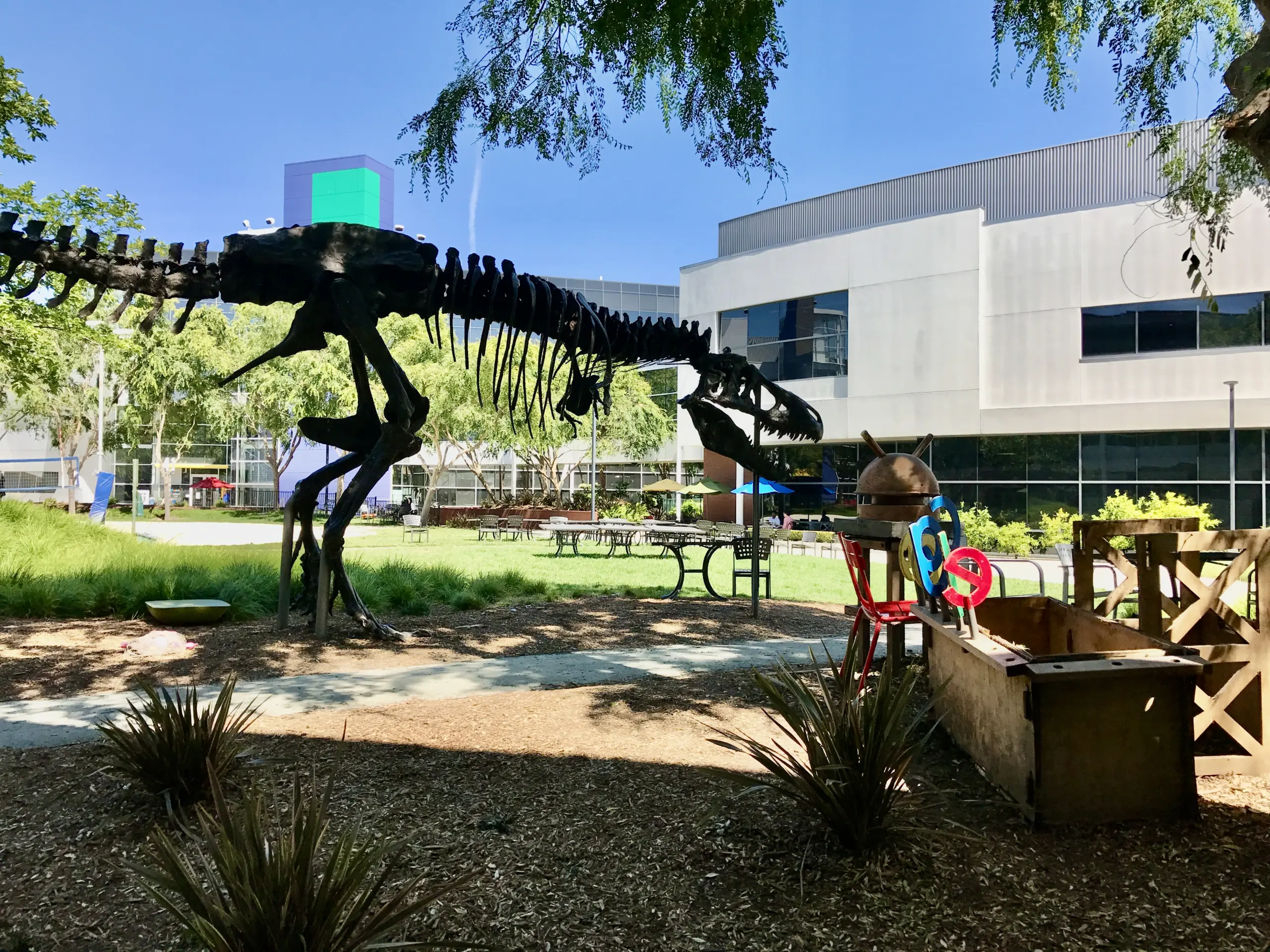
    I recently came across this image I took of a fossil at the Google campus years ago and thought it’s the perfect match for this post.

    A quiet reminder that in fast-moving environments – whether tech, corporate, or founder life – staying proactive as a founder isn’t just helpful, it’s what keeps you evolving.

    And even though I’ve always considered myself someone who thinks ahead, I recently had another moment that reminded me how different proactivity becomes once you run your own business.

    You’re constantly operating in two timelines:
    The one you’re working in today, and the one you need to shape for tomorrow.

    Nothing dramatic happened.
    Nothing stressful.
    Just a realization that this skill – thinking ahead, preparing options, keeping momentum – matters more than ever.

    A familiar skill … used in a new way

    I was lucky to learn proactive thinking early in my career, surrounded by strong managers and mentors, especially during my time at dentsuL’Oréal and later EnBW.

    They taught me to:

    • Anticipate instead of react
    • Look beyond the quarter
    • Prepare before it becomes urgent
    • Create momentum intentionally

    Those lessons shaped how I work to this day.

    But as a founder, this skill shifts.
    It stops being an advantage and becomes something else:

    Proactivity becomes stability.
    Proactivity becomes strategy.
    Proactivity becomes calm.

    It’s not about being busy, it’s about staying ready.

    Why proactivity matters so much in founder life

    1. Opportunities grow slowly, then suddenly

    A good conversation today might turn into something months later. Sometimes earlier, sometimes later, but rarely instantly.

    2. Trust builds before the project does

    Especially in consulting and interim roles. People work with people they trust, not just CVs.

    3. Momentum replaces structure

    You don’t inherit processes or planning cycles. You create your own rhythm and protecting that rhythm matters.

    4. Proactivity reduces uncertainty

    The more you explore early, the less you stress later.

    What tends to surprise people in large organizations…

    When I meet friends and former colleagues from corporate environments, they often expect founder life to be more “free-flowing”, “spontaneous” but most of all “super uncertain”

    But what surprises them most is:

    • Uncertainty is normal, not a signal something’s wrong
    • You stay in conversation even when you’re fully committed
    • Opportunities are relationship-driven, only partly process-driven
    • Planning early creates calm, it’s not about fear
    • You design your structure instead of inheriting one

    The system is simply different, more fluid, more personal, and more dependent on trust and timing. That’s what “proactive as a founder” really means.

    How I try to stay proactive (still evolving)

    I’m still early in my founder journey, so my approach is simple and very human.

    1. Staying connected with interim recruiters

    Players like Hays, Amadeus Fire and others are important sparring partners. It helps to know each other well before there’s an opportunity.

    2. Investing in relationships consistently

    Reaching out to my network regularly, not because I need something, but because relationships matter long before you activate them.

    3. Keeping my network warm throughout the year

    A short message, a voice note, a spontaneous coffee.

    4. Staying visible in a way that feels authentic

    Through writing, reflection, and sharing perspectives, not promotion.

    Proactivity doesn’t need to feel loud or demanding.
    It can feel light.

    Micro-Practices that make proactivity feel easy

    Here are a few things that help me keep momentum without turning it into a task list:

    10 minutes each week to review my conversations

    Who did I talk to?
    Whom would I like to reconnect with?

    Capture potential opportunities instantly

    A name mentioned in a meeting.
    A conversation that sparked something.
    Write it down, future you will thank you.

    One intentional conversation per week

    Not sales.
    Just connection.

    A monthly self-check on workload, energy, and direction

    It helps me understand my own cycles.
    Small habits create clarity.
    And clarity creates calm.

    Proactivity creates space

    For me, being proactive as a founder is not about being busy and not about predicting the future.

    It’s about creating space…

    … space to focus on work,

    … space to build relationships,

    … space to enjoy the present without worrying about the next step.

    Even though I’m still early in my founder journey, I see how powerful this mindset is. And how much of it comes from the things I learned long before starting my own business.

    And if your 2026 planning is already starting (proactivity club, welcome!)… I’m always happy to talk. 😉

    More about my work: Linelia’s services

    For anything else, just drop me a note via my contact page or connect with me on  LinkedIn. Always up for a chat.

  • Visibility without cringe? Still working on it.

    Visibility without cringe? Still working on it.

    Learning to show up publicly as a founder is surprisingly challenging.

    Not because I’m shy, quite the opposite. I genuinely enjoy being on stage, connecting with people, moderating discussions, and exchanging ideas. That part has always energized me.

    But talking about myself?

    Writing about how I work?

    Sharing insights publicly?

    That’s where things quickly move into the territory of visibility without cringe … a space I still haven’t fully mastered.

    These days, a few people told me they enjoy reading my articles. Real people, not just the LinkedIn algorithm.

    That feedback made me pause and reflect on why visibility still feels odd sometimes and why it’s becoming a skill I need to embrace.

    Why good work alone doesn’t create visibility

    Inside large organizations, great work usually finds its way: leadership updates, cross-functional meetings, stakeholder presentations, internal communication (and sometimes political play) help make your work seen.

    As a founder, that entire system more or less disappears.

    And that’s where the challenge begins:

    How to build visibility without cringe, without becoming overly polished or overly promotional.

    Visibility matters because it builds trust long before someone reaches out.

    It connects dots you don’t even know you’re drawing.

    Personal visibility still feels a little strange

    I’m not a quiet person.

    But shifting the communication toward myself still feels unfamiliar.

    For many years, the “sale” wasn’t me, it was the product, the team, the brand, the strategy.

    Now, clients buy my judgment, my approach, my experience.

    That shift requires a level of personal visibility I’m still getting used to. What surprises me is this:

    And personal always brings a bit of vulnerability, even if you’re used to being on stage.

    The nice surprise: Feedback actually helps

    When someone tells you they enjoy your content, your articles, or your reflections, it suddenly feels less awkward.

    A few people said exactly this these days and it meant more than expected to me.

    Visibility without cringe seems to become easier when you remember there are people on the other side. People who find value, resonance, or simply a smile in what you share.

    Why I’m trying to be visible anyway

    The reason is simple and strategic:

    People need to understand how you think, what you stand for, how you approach challenges, and what kind of problems you solve. And it also helps me to understand and sharpen exactly this as well.

    Visibility helps people recognize fit long before the first call.

    It’s not about shouting. It’s about being present.

    Fortunately, “visibility without cringe” seems to be possible when it’s built on value, not vanity.

    What I’m Trying to Practice (Even If It Doesn’t Always Work)

    To make visibility feel more natural, I’m experimenting with tiny habits. Not to become a content creator, but to stay present in a way that feels authentic.

    Here’s what I’m trying:

    • Sharing learnings, not wins
    • Writing thoughts as they come, not polishing endlessly
    • Publishing weekly (when life allows… last week it didn’t)
    • Showing small behind-the-scenes moments
    • Connecting instead of promoting

    And yes, sometimes this fails completely.

    Last week was exactly like this: three days in Munich, remote meetings between trains and dinners, and a weekend fully dedicated to family time and my new espresso machine.

    Zero writing.

    Zero “visibility.”

    Lots of life.

    I Also Need to Get Better at… Taking Photos

    Another unexpected challenge in this “visibility without cringe” journey:

    Finding fitting photos for my articles.

    I’m not naturally someone who takes selfies, documents every moment, or snaps pictures in meetings.

    But for storytelling – and especially for LinkedIn – images matter.

    It’s a skill I’ll need to train:

    Taking photos that feel real, unobtrusive, and still reflect what I want to say.

    Because the right photo makes an article more human.

    The wrong one makes it… well, cringe. Some you can see on my LinkedIn or even here in the blog.

    So yes, another founder skill to learn.

    Add it to the list.

    Visibility as a Founder Skill

    Being visible isn’t about volume or perfection.

    It’s about clarity, intention, and connection.

    For founders, visibility helps:

    • Build trust
    • Create opportunities
    • Show how you think
    • Let people understand you more easily
    • Bring your network closer
    • and yes of course, support your business

    I’m hopefully getting better at it.

    Slowly.

    One article, one post, one flat white at a time.

    If you’re interested in how I help organizations navigate their own transformations, you can find an overview of my work here: Linelia’s services.

    And as always, I’m happy to connect.

    Whether you’d like to exchange ideas or explore how we might collaborate, just drop me a note via my contact page or connect with me directly on LinkedIn.
  • 3 small behaviors making collaboration faster & easier

    3 small behaviors making collaboration faster & easier

    Collaboration sounds simple. In reality, it’s one of the biggest challenges across almost every organization I’ve worked with, from corporates to agencies to scale-ups.

    Different teams move at different speeds, goals aren’t always communicated clearly, and priorities shift faster than people can realign. With a little everyday pressure, even the most motivated teams can slow down. Over the years, I’ve noticed it’s rarely the big frameworks or complex processes that change collaboration for the better…it’s the small behaviors.

    Over the years, I’ve noticed that it’s often not the big frameworks or the complex processes that change collaboration for the better. It’s the small behaviors that improve collaboration.

    The ones that take almost no effort, but create a huge impact on speed, alignment, and quality of work. Here are three of them…

    1. Share insights broadly, not selectively

    One of the biggest reasons collaboration slows is that information gets stuck in pockets…inside teams, between agencies, or along the hierarchy.

    Not because people want to hide information, but because:

    • Goals aren’t communicated clearly
    • Assumptions aren’t challenged
    • Political dynamics get in the way
    • or simply because “everyone is busy”

    The result is always the same:

    • Decisions get delayed
    • Meetings multiply
    • Teams start solving different versions of the same problem

    So here’s what I’ve learned:

    Not the huge “knowledge-sharing initiatives” but the small things:

    • Share working drafts, not only final versions
    • Summarize key insights after a call
    • Align on goals early and write them down
    • Don’t wait for the “perfect moment” to update others

    If you want to explore this further:

    Team of Teams by Stanley McChrystal offers a great perspective on why transparent information flow is often more powerful than strict hierarchy especially in fast-moving environments.

    2. Provide unfiltered truth, respectfully!

    Many teams avoid being completely honest. Very often not because they want to hide something, but because they don’t want to disrupt harmony or step on someone’s toes.

    One of the advantages of being an external partner or interim manager is that you can name things without being tied to internal agendas. And often, that’s exactly what teams need.

    Unfiltered truth doesn’t mean being harsh. It means being clear.

    Sometimes it’s as simple as:

    • “Does this really get us where we want to go?”
    • “Aren’t we just solving a symptom, not the root cause?”
    • “Do you really think timeline and ambition are aligned yet?”

    Clarity accelerates decisions and these are behaviors that improve collaboration.

    And most people appreciate it more than expected, because clarity creates confidence.

    If you want to explore this further:

    Radical Candor by Kim Scott is an established framework for giving clarity while remaining respectful and constructive. A valuable read for anyone working across teams.

    3. Ask the obvious questions

    This is one of the most underrated leadership behaviors.

    In many meetings, people hesitate to ask simple questions because they assume someone else must know the answer or because they fear it might sound too basic.

    But here’s what I’ve learned:

    And if nobody asks, the misunderstanding will surface later. Usually when it’s more painful.

    Asking questions helps to:

    • Unblock discussions
    • Clarify assumptions
    • Avoid misunderstandings
    • Align on next steps
    • Reduce politics and interpretation

    Questions like:

    • “Am I the only one who doesn’t quite get this?”
    • “Can we clarify the goal one more time?”
    • “What does success look like here?”
    • “What is the constraint we’re working with?”
    • “What do we absolutely need to decide today?”

    These are simple questions, but they create alignment in seconds.

    If you want to go deeper:

    A More Beautiful Question by Warren Berger is an excellent exploration of how simple questions lead to clarity, progress, and better decision-making.

    Why these behaviors matter even more in interim and cross-functional work

    Interim roles mean this:
    You join moving teams, with projects already in flight, priorities shifting, and multiple stakeholders in the mix.

    You don’t always have the luxury of long onboarding phases.

    You need clarity fast.

    That’s why these behaviors matter so much:

    • Sharing information openly prevents misalignment
    • Honest clarity accelerates decisions
    • Asking questions helps you arrive at shared understanding quickly

    And the truth is:

    Small behaviors, big impact

    Collaboration doesn’t fail because people don’t want to work together.

    It fails because small behaviors compound: silence, assumptions, politeness, uncertainty.

    The good news: The opposite is also true. Small positive behaviors compound too.

    1. Share openly
    2. Say the helpful truth
    3. Ask the honest questions

    If you start with one of these next week, you’ll likely notice a difference immediately: In clarity, speed, and overall momentum.

    If you’re curious how I support organizations in their own transformation journeys, you can find more about my work here: Linelia’s services

    And of course, I’m always happy to hear from you. If you’d like to exchange ideas or explore how we might work together, feel free to reach out via my contact page or directly connect via LinkedIn.

  • Routines that keep me sane and productive

    Routines that keep me sane and productive

    The freedom of running your own business often sounds limitless but for me, it works best with a clear framework. Incorporating effective founder routines for productivity can help establish that framework.

    Client work gives my week a natural rhythm. Around it, I’ve built my own routines for productivity. Small habits that keep me focused, connected, and calm in the middle of busy weeks.

    They’re not perfect or sophisticated, but they’ve proven to work for me in the last months.

    My routines for productivity create freedom

    When you work with multiple clients, expectations and deliverables already define part of the pace. The challenge is to build around that: routines for productivity that give your days shape without overloading them.

    For me, these habits are less about discipline and more about mental clarity. The ability to focus on what matters most without constantly switching contexts.

    Weekly network cadence: light, consistent, real

    I’ve learned and love that it’s easier to stay in touch regularly than to rebuild connections only when you need something.

    Every week, I reach out to a few people, not for business, but simply to stay in touch.

    A short message, a voice note, or a “how are things?” often keeps the door open for real conversations later.

    Lunches, dinners & events with intent

    I try to schedule one or two lunches or dinners each week, always with a clear intention: sparring, feedback, or exploring collaboration.

    On top I’m trying to host regular small “events” like meeting at Oktoberfest (a must-have to stay connected in Munich) or X-mas dinners.

    It’s not about collecting business cards, it’s about meaningful conversations with people who share curiosity and drive.

    Monthly anchor: Showing up in Munich

    Even though I work remotely most of the time, I make it a point to be onsite in Munich at least once a month.

    Many of my professional (and personal) connections are based there, and meeting people in person adds a layer of trust you simply can’t replicate online.

    When I plan those days, I try to group 2–3 meetings with partners, prospects, or peers for sparring sessions into a single trip.

    It’s an efficient way to keep relationships warm without forcing “networking.”

    Content rhythm: Blog + LinkedIn without the burnout

    Writing has become a fixed part of my rhythm at Linelia. It helps me reflect, share, and stay visible without turning content into pressure.

    My cycle looks like this:

    • Fri–Sun: ideation, draft, edit.
    • Tue or Thu: publish on the Linelia blog and / or LinkedIn.

    That cadence keeps things steady and gives each piece enough space to mature. Some weekends it’s a long read; others it’s a quick thought.

    Over time, these routines for productivity have become second nature. Helping me stay consistent even when projects overlap or schedules shift.

    Ongoing upskilling: Learning as part of the job

    Running my own business means constantly switching between doing and learning.

    Each week, I focus on one small “learning sprint”, about 30 to 45 minutes dedicated to improving one area.

    Sometimes it’s sales or marketing, other times admin, finance, or exploring a new AI or automation tool. I use platforms like LinkedIn LearningGoogle Skillshop, and OpenAI Academy for quick, focused learning. I also follow selected tech and business media such as WIREDTechCrunchThe VergeHarvard Business Review, and The Information to stay curious and inspired.

    It’s a light commitment that compounds over time and keeps curiosity alive.

    Routines for productivity build calm for me

    The longer I run Linelia, the clearer it becomes that fun and hopefully success as a founder isn’t about endless hustle. It’s about rhythm and the right routines for productivity that create calm and focus.

    These routines help me deliver consistent quality, and leave space for creativity and connection.

    If one of these ideas resonates, try it next week and see what difference it makes.

    If you’re curious how I support organizations and founders in their own transformation journeys, you can find more about my work here: Linelia’s services

    And of course, I’m always happy to hear from you. If you’d like to exchange ideas or explore how we might work together, feel free to reach out via my contact page or directly connect via LinkedIn.