
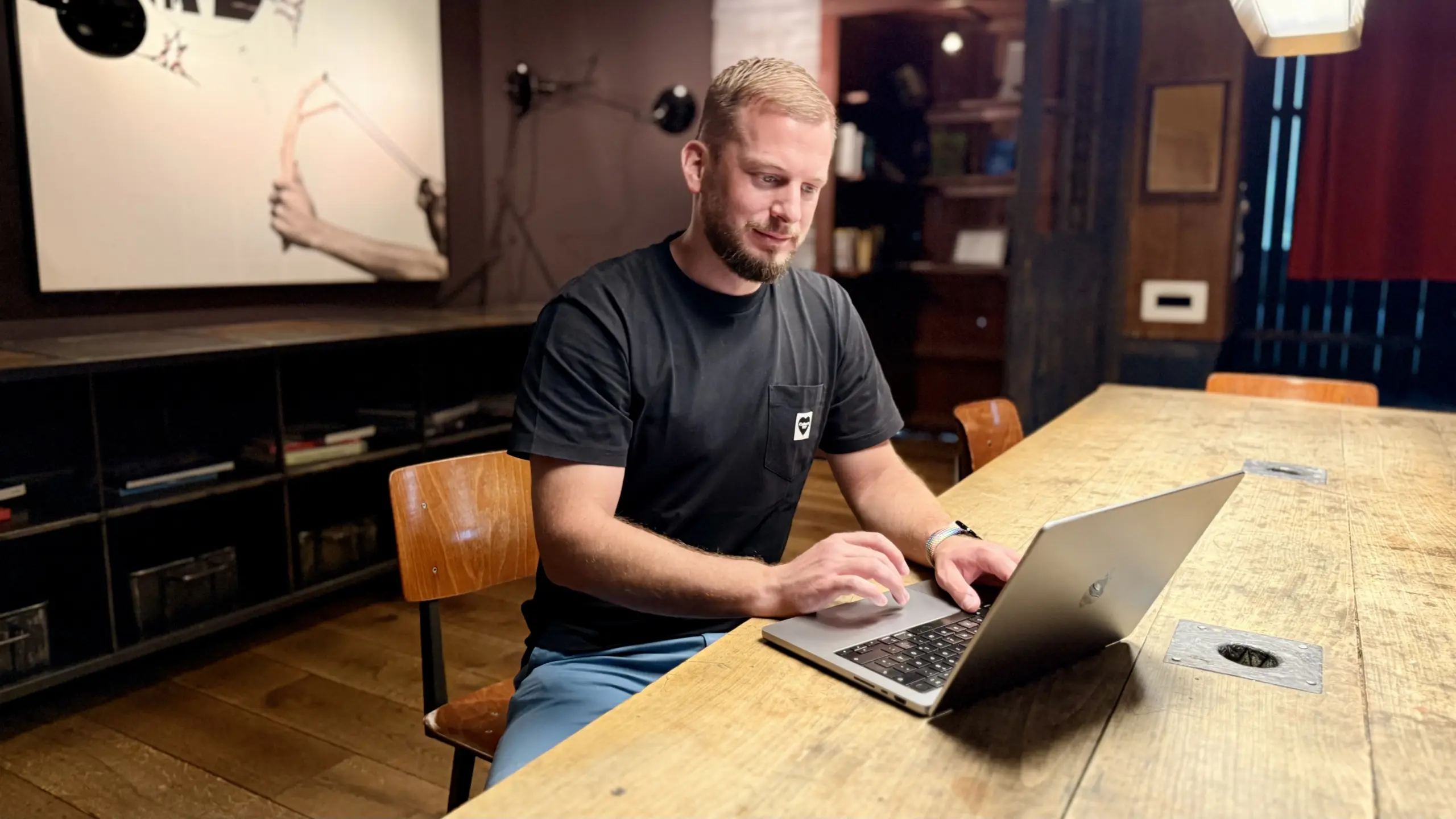
Posts in Transformation

Category: Transformation

  • Visibility without cringe? Still working on it.

    Visibility without cringe? Still working on it.

    Learning to show up publicly as a founder is surprisingly challenging.

    Not because I’m shy, quite the opposite. I genuinely enjoy being on stage, connecting with people, moderating discussions, and exchanging ideas. That part has always energized me.

    But talking about myself?

    Writing about how I work?

    Sharing insights publicly?

    That’s where things quickly move into the territory of visibility without cringe … a space I still haven’t fully mastered.

    These days, a few people told me they enjoy reading my articles. Real people, not just the LinkedIn algorithm.

    That feedback made me pause and reflect on why visibility still feels odd sometimes and why it’s becoming a skill I need to embrace.

    Why good work alone doesn’t create visibility

    Inside large organizations, great work usually finds its way: leadership updates, cross-functional meetings, stakeholder presentations, internal communication (and sometimes political play) help make your work seen.

    As a founder, that entire system more or less disappears.

    And that’s where the challenge begins:

    How to build visibility without cringe, without becoming overly polished or overly promotional.

    Visibility matters because it builds trust long before someone reaches out.

    It connects dots you don’t even know you’re drawing.

    Personal visibility still feels a little strange

    I’m not a quiet person.

    But shifting the communication toward myself still feels unfamiliar.

    For many years, the “sale” wasn’t me, it was the product, the team, the brand, the strategy.

    Now, clients buy my judgment, my approach, my experience.

    That shift requires a level of personal visibility I’m still getting used to. What surprises me is this:

    And personal always brings a bit of vulnerability, even if you’re used to being on stage.

    The nice surprise: Feedback actually helps

    When someone tells you they enjoy your content, your articles, or your reflections, it suddenly feels less awkward.

    A few people said exactly this these days and it meant more than expected to me.

    Visibility without cringe seems to become easier when you remember there are people on the other side. People who find value, resonance, or simply a smile in what you share.

    Why I’m trying to be visible anyway

    The reason is simple and strategic:

    People need to understand how you think, what you stand for, how you approach challenges, and what kind of problems you solve. And it also helps me to understand and sharpen exactly this as well.

    Visibility helps people recognize fit long before the first call.

    It’s not about shouting. It’s about being present.

    Fortunately, “visibility without cringe” seems to be possible when it’s built on value, not vanity.

    What I’m Trying to Practice (Even If It Doesn’t Always Work)

    To make visibility feel more natural, I’m experimenting with tiny habits. Not to become a content creator, but to stay present in a way that feels authentic.

    Here’s what I’m trying:

    • Sharing learnings, not wins
    • Writing thoughts as they come, not polishing endlessly
    • Publishing weekly (when life allows… last week it didn’t)
    • Showing small behind-the-scenes moments
    • Connecting instead of promoting

    And yes, sometimes this fails completely.

    Last week was exactly like this: three days in Munich, remote meetings between trains and dinners, and a weekend fully dedicated to family time and my new espresso machine.

    Zero writing.

    Zero “visibility.”

    Lots of life.

    I Also Need to Get Better at… Taking Photos

    Another unexpected challenge in this “visibility without cringe” journey:

    Finding fitting photos for my articles.

    I’m not naturally someone who takes selfies, documents every moment, or snaps pictures in meetings.

    But for storytelling – and especially for LinkedIn – images matter.

    It’s a skill I’ll need to train:

    Taking photos that feel real, unobtrusive, and still reflect what I want to say.

    Because the right photo makes an article more human.

    The wrong one makes it… well, cringe. Some you can see on my LinkedIn or even here in the blog.

    So yes, another founder skill to learn.

    Add it to the list.

    Visibility as a Founder Skill

    Being visible isn’t about volume or perfection.

    It’s about clarity, intention, and connection.

    For founders, visibility helps:

    • Build trust
    • Create opportunities
    • Show how you think
    • Let people understand you more easily
    • Bring your network closer
    • and yes of course, support your business

    I’m hopefully getting better at it.

    Slowly.

    One article, one post, one flat white at a time.

    If you’re interested in how I help organizations navigate their own transformations, you can find an overview of my work here: Linelia’s services.

    And as always, I’m happy to connect.

    Whether you’d like to exchange ideas or explore how we might collaborate, just drop me a note via my contact page or connect with me directly on LinkedIn.

  • 3 small behaviors making collaboration faster & easier

    3 small behaviors making collaboration faster & easier

    Collaboration sounds simple. In reality, it’s one of the biggest challenges across almost every organization I’ve worked with, from corporates to agencies to scale-ups.

    Different teams move at different speeds, goals aren’t always communicated clearly, and priorities shift faster than people can realign. With a little everyday pressure, even the most motivated teams can slow down. Over the years, I’ve noticed it’s rarely the big frameworks or complex processes that change collaboration for the better…it’s the small behaviors.

    Over the years, I’ve noticed that it’s often not the big frameworks or the complex processes that change collaboration for the better. It’s the small behaviors that improve collaboration.

    The ones that take almost no effort, but create a huge impact on speed, alignment, and quality of work. Here are three of them…

    1. Share insights broadly, not selectively

    One of the biggest reasons collaboration slows is that information gets stuck in pockets…inside teams, between agencies, or along the hierarchy.

    Not because people want to hide information, but because:

    • Goals aren’t communicated clearly
    • Assumptions aren’t challenged
    • Political dynamics get in the way
    • or simply because “everyone is busy”

    The result is always the same:

    • Decisions get delayed
    • Meetings multiply
    • Teams start solving different versions of the same problem

    So here’s what I’ve learned:

    Not the huge “knowledge-sharing initiatives” but the small things:

    • Share working drafts, not only final versions
    • Summarize key insights after a call
    • Align on goals early and write them down
    • Don’t wait for the “perfect moment” to update others

    If you want to explore this further:

    Team of Teams by Stanley McChrystal offers a great perspective on why transparent information flow is often more powerful than strict hierarchy especially in fast-moving environments.

    2. Provide unfiltered truth, respectfully!

    Many teams avoid being completely honest. Very often not because they want to hide something, but because they don’t want to disrupt harmony or step on someone’s toes.

    One of the advantages of being an external partner or interim manager is that you can name things without being tied to internal agendas. And often, that’s exactly what teams need.

    Unfiltered truth doesn’t mean being harsh. It means being clear.

    Sometimes it’s as simple as:

    • “Does this really get us where we want to go?”
    • “Aren’t we just solving a symptom, not the root cause?”
    • “Do you really think timeline and ambition are aligned yet?”

    Clarity accelerates decisions and these are behaviors that improve collaboration.

    And most people appreciate it more than expected, because clarity creates confidence.

    If you want to explore this further:

    Radical Candor by Kim Scott is an established framework for giving clarity while remaining respectful and constructive. A valuable read for anyone working across teams.

    3. Ask the obvious questions

    This is one of the most underrated leadership behaviors.

    In many meetings, people hesitate to ask simple questions because they assume someone else must know the answer or because they fear it might sound too basic.

    But here’s what I’ve learned:

    And if nobody asks, the misunderstanding will surface later. Usually when it’s more painful.

    Asking questions helps to:

    • Unblock discussions
    • Clarify assumptions
    • Avoid misunderstandings
    • Align on next steps
    • Reduce politics and interpretation

    Questions like:

    • “Am I the only one who doesn’t quite get this?”
    • “Can we clarify the goal one more time?”
    • “What does success look like here?”
    • “What is the constraint we’re working with?”
    • “What do we absolutely need to decide today?”

    These are simple questions, but they create alignment in seconds.

    If you want to go deeper:

    A More Beautiful Question by Warren Berger is an excellent exploration of how simple questions lead to clarity, progress, and better decision-making.

    Why these behaviors matter even more in interim and cross-functional work

    Interim roles mean this:
    You join moving teams, with projects already in flight, priorities shifting, and multiple stakeholders in the mix.

    You don’t always have the luxury of long onboarding phases.

    You need clarity fast.

    That’s why these behaviors matter so much:

    • Sharing information openly prevents misalignment
    • Honest clarity accelerates decisions
    • Asking questions helps you arrive at shared understanding quickly

    And the truth is:

    Small behaviors, big impact

    Collaboration doesn’t fail because people don’t want to work together.

    It fails because small behaviors compound: silence, assumptions, politeness, uncertainty.

    The good news: The opposite is also true. Small positive behaviors compound too.

    1. Share openly
    2. Say the helpful truth
    3. Ask the honest questions

    If you start with one of these next week, you’ll likely notice a difference immediately: In clarity, speed, and overall momentum.

    If you’re curious how I support organizations in their own transformation journeys, you can find more about my work here: Linelia’s services

    And of course, I’m always happy to hear from you. If you’d like to exchange ideas or explore how we might work together, feel free to reach out via my contact page or directly connect via LinkedIn.